

品切れ
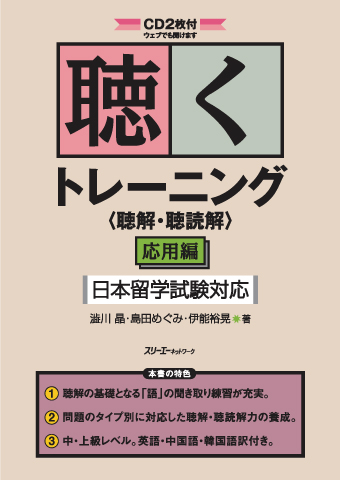
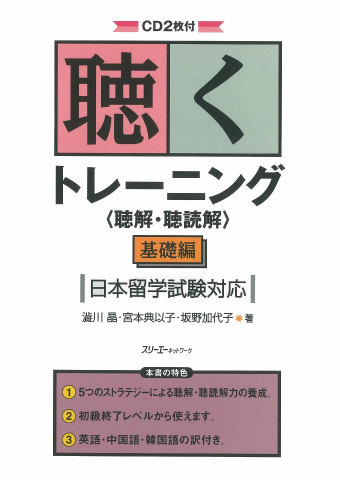
聴くトレーニング<聴解・聴読解>基礎編 日本留学試験対応
★本書には改訂版があります。(改訂版の詳細はこちら)
初級修了後から中級前期の学習者のための、聴解・聴読解問題集です。聞き取りの基本的な練習から、ストラテジー別に、大切なポイントを聞き取る練習へ段階を踏んで練習できます。
単なる試験対策のためだけではなく、しっかり「聞く」、「聞きながら読む」力をつけるための練習ができます。基本的な音の聞き分け練習から、日本留学試験の聴解・聴読解問題と同じ形式の実践練習までを取り入れています。解法と語彙には英語・中国語・韓国語の訳がついているので、初級修了段階から使えます。
目次
この本をお使いになる方へ
聴解・聴読解ストラテジー
パート1 「基礎」編
§セクション1<基礎トレーニング>
基礎トレーニング①
基礎トレーニング②
■学部・学科
§セクション2<語彙のトレーニング>
①学習・研究生活
②キャンパス生活
③日常生活
■問題によく出てくる登場人物
パート2 「例題と解法」編
§セクション1<聴解>
ストラテジー1⃣:必要な情報を探して聞く
①1つのポイントを聞き取る
②一人の話者の内容に注目して聞く
ストラテジー2⃣:聞き取った情報を別の言葉に置き換える
①聞き取った情報を言い換えた内容の選択肢を探す
②聞き取った情報を短くまとめた内容の選択肢を探す
ストラテジー3⃣:最後に出てくるポイントを聞き逃さない
■聴解問題を解くときに注意すること
§セクション2<聴読解>
ストラテジー1⃣:情報を捨てていく
①情報を一つずつ捨て、最後に残ったものが正解
②情報を捨て、残ったものから条件に合うものを1つ選び出す
ストラテジー2⃣:情報を拾っていく
①視覚情報と、音声情報のキーワードを一致させる
②あてはまるポイントを複数拾い、選択肢と一致させる
■聴読解問題を解くときに注意すること
パート3 「練習」編
§セクション1<聴解>
§セクション2<聴読解>
語彙訳リスト
索引
補助教材
本書には以下の補助教材があります。
ユーザー登録後ログインすることでより便利にご利用いただけるようになります。
上部メニューの「ユーザー登録」より、氏名・メールアドレス・お住まいの地域を登録してください。
-
- 学習補助ツール
-
音声
- 登録不要
- 無料
- 『聴くトレーニング〈聴解・聴読解〉基礎編 日本留学試験対応』付属CDの音声
品切れ
聴くトレーニング<聴解・聴読解>基礎編 日本留学試験対応
-
価格: 2,420円(税込)
- 判型: B5
- 頁数: 210頁
別冊: 23頁 (スクリプト・解答)
-
CD: 2枚
- ISBN: 9784883193714