|
|
| 3A Corporation
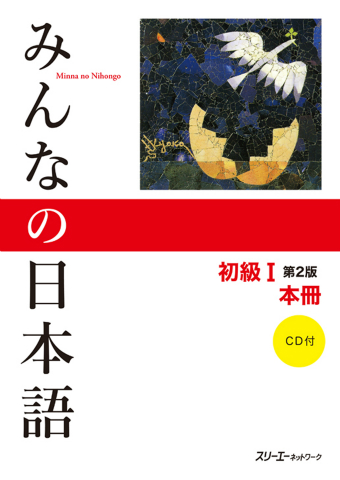
Online Leaflets for the Minna no Nihongo Series |
|
|
Leaflets for the Minna no Nihongo Series No.40 |
|
|
| The Difficulty of the Japanese Language |
|
Tatsuo Miyajima
Emeritus Researcher
The National Institute for Japanese Language |
 |
|
1. What languages are difficult?
The American State Department has divided foreign languages into four groups according to their level of difficulty for American learners (‘Kotoba no Jukai’ [The Forest of Words], Eiichi Chino, Seidosha, 1999).
Group 1: French, German, Italian, Swahili
Group 2: Bulgarian, Greek, Hindi, Indonesian
Group 3: Hungarian, Russian, Turkish, Vietnamese
Group 4: Arabic, Chinese, Japanese, Korean
As the Group 1 languages are all written using the Roman alphabet, and all the languages using Chinese characters (Chinese, Japanese, and Korean) are in Group 4, it would seem the type of transcription of the written word has an effect. Looking at the above point, even if Japanese is not the most difficult language in the world to learn, it would not be wrong to say it is a language that foreigners do find difficult. With modern Japanese, people can manage with about 2,000 Chinese characters, which, compared with the 4,000 or 5,000 characters needed for Chinese, makes it seem relatively easy. Moreover, because there is kana, even if a first year elementary school student doesn’t know such Chinese characters as 「遠足(ensoku), 弁当 (bentoo), 動物園 (doobutsuen)」, he/she can still write sentences. In Chinese, if you don’t understand Chinese characters, you cannot write at all. However, foreign students from China say that studying the Chinese characters used in Japanese is difficult. Chinese characters have only one way of being read, while in Japanese, as can be seen with 「生きる(ikiru), 生まれる (umareru), 生ビール (nama biiru), 生活 (seikatsu), 生涯 (shoogai)」, there can be various readings, and when it comes to people’s and place names, the Chinese cannot read these without asking.
But leaving aside the problem of transcription, the difficult thing with Japanese is honorific language. Korean also has honorific language, but in Japanese, as there is a greater degree of situations in which honorifics must be used in different ways, it is much more burdensome. Because even the Japanese themselves find it difficult, books with such titles as ‘The Correct Use of Honorific Language’ always sell well.
In other respects, however, Japanese does not seem to have any points that are particularly difficult. Having five vowels is a common number, and nearly half the languages in the world have the word order of 「わたしは (subject [S]) 本を (object [O]) よむ (verb [V])」 found in Japanese. Though the commonly used languages of English and Chinese have the word order of ‘SVO’, if we look at the world’s languages, we unexpectedly find that languages with the ‘SOV’ word order are more common. (‘Sekai Shogengo no Chiriteki・Keitooteki Gojun Bunpu to Sono Hensen’ [Geographical and Genealogical Distribution and Transition of the Word Order of World Languages], Hideki Yamamoto, Keisuisha, 2003)
SOV (subject + object + verb) 48.5%
SVO (subject + verb + object) 38.7%
VSO (verb + subject + object) 9.2%
Others 3.6%
Because when we, the Japanese, say ‘foreign language’ we automatically think of English, we tend to think that Japanese, with its frequent omission of subject and lack of distinction for plural or singular number, is a special language, but there is a book that concludes that, if we compare the structure of various world languages, “Japanese is not a special language. However, English is a special language.” (‘Sekai no Gengo to Nihongo’ [World Languages and Japanese], Tasaku Tsunoda, Kurosio Publishing Company, 1991)
The biggest problem is there are no other languages close to Japanese. In the above list of languages according to difficulty of learning, the perspective is from that of English speakers, and so languages similar to English are easier to study. Therefore, Group 1 comprises nearly all European languages. If it were from the perspective of Bulgarians, Russian would be an easy language to learn, and would therefore be in Group 1. However, if the languages are looked at from the perspective of the Japanese, most of the languages would be in Group 3 or 4; there would not seem to be any languages in Group 1 or 2. In terms of grammatical structure, the closest language is Korean, which even has particle equivalents of 「は(wa)」 and 「が(ga)」, and so 「去年ソウルへも行った (Kyonen Seoul e mo itta)」can be translated as it is, including particles and endings, into Korean, but, with the exception of imported words of Chinese origin, there are no similar words. Pronunciation is also very different. Therefore, it can be said that there are no easy-to-learn foreign languages for the Japanese, and similarly, Japanese is difficult for all foreigners.
2. Language and Dialect
The following is a conversation I took part in on a tour bus in Oslo, the capital of Norway. The guide started the tour talking in English and Italian. However, along the way, another group of tourists boarded the bus, and the guide then started to talk in another language. When the bus next stopped, I asked, “Where are those people from, and in what language are you talking to them?”, to which the guide replied, “They are Swedish and I am talking to them in Norwegian.” The guide then said, “If I try really hard I can speak Swedish, but, anyway, not so well as Swedes, but as I completely understand Swedish, they certainly can understand my Norwegian 100%, so there is no reason for me to speak in Swedish.” If this were occurring in Japan, the conversation would be about the differences caused by regional dialects. Tour groups in Kyoto would hear the guide use such Kyoto dialect words as「〜どすえ」(~ dosue), and in Nagasaki, they would hear the guide say 「〜ばってん」(~ batten), both of which they would understand. In Northern Europe, with the exception of Finnish, the origin of which is different, the languages of Norwegian, Swedish and Danish are very similar and can be heard and readily understood by users of any of the three languages. In Oslo bookshops you cannot find such books as ‘Beginner Swedish’ or ‘Danish Conversation’. If it is only a question of talking, once people get used to the slight differences, people can readily converse in any of the languages.
A common criteria for defining whether something is a dialect or a foreign language is “If you can hear and understand each other it’s a dialect and if you can’t it’s a foreign language”, and even in scholarly terms there is no other criteria than that; however, there are in fact many foreign languages in the world that can be readily heard and understood by speakers of other languages. Czech and Slovak as well as Spanish and Italian fit into this category. In contrast, however, regional dialects in China and Japan can be completely incomprehensible to people from other parts of the same country.
If you look at 「ウヤンレーカラヌ ヤマグヤタクトゥ ワラビシーンカラ スンブカーン サックン」 (Uyanreekaranu yamaguyatakutu warabishinkara sunbukaan sakkun) you would not think it was Japanese. In fact, this is 「親譲りの無鉄砲で小供の時から損ばかりしている。」 (Oyayuzuri no muteppoo de kodomo no toki kara sonbakari shiteiru) (Having inherited the recklessness of my parents, since a child I have always come out at the losing end), the first line from Natsume Soseki’s novel ‘Botchan’, in Okinawan dialect. Now, Okinawans speak standard Japanese, but a long time ago, people from the mainland probably had to speak to them in English out of necessity. Let us cite a similar example. In Taiwanese Chinese, there are the Minan and Hakka languages, both of which are Chinese dialects, but you cannot communicate by using either. For that reason, there are old people who still speak to each other in the Japanese they remember from the colonial period.
An example at the other extreme is the former Yugoslavia’s Serbian and Croatian languages. Scholastically, these languages are one, the only difference being dialectical; however, Serbian, which is used in the east, is written in the Cyrillic alphabet, while Croatian, which is used in the west, is written using the Roman alphabet. Consequently, they have become different languages, and the initial cause of the different sense of ethnicity, and the resulting ethnic cleansing and killing.
I have some old newspapers from before the breakup of the country. The first page is in Cyrillic (Serbian), the second page in Roman letters (Croatian), with pages three and four continuing in the same vein, alternating between Serbian and Croatian. Furthermore, in the newspaper on the next day, the process is reversed with the Croatian being on the odd-numbered pages and Serbian on the even-numbered pages. I wonder what they do now, now that the country has broken up.
According to what a Russian has said, it is very difficult translating between the countries of the former Yugoslavia (Serbia, Croatia, Slovenia, etc.). The language differences, even though very small, are accentuated and have to be translated. If Japan were to break up, Tokyo dialect written in hiragana script could be the national language of the country of Tokyo, and Yokohama dialect written in katakana script could be the national language of the country of Yokohama. When the Tokyo ambassador arrives in Yokohama his greeting could be in standard Tokyo Japanese. In such a situation, people, whether they spoke Tokyo Japanese or Yokohama Japanese, could completely understand. However, in translating, when differences were found between the two languages, they would somehow have to be translated from one language to the other. If this is the actual situation in Eastern Europe, translating must be the most difficult in the world.
3. Religion and Alphabets
The use of different alphabets for Serbian and Croatian is to do with religion.
Though both Christian, because Serbia is Russian Orthodox and Croatia is
Catholic they have adopted their respective alphabets. This is also true
of other Slavic languages as well and for the same reason: Russian and
Bulgarian use the Cyrillic alphabet, while Polish, Czech and Slovak use
the Roman alphabet. Outside of Europe as well, there are examples like
this. While people can communicate in either the Indian language of Hindi
or the Pakistani language of Urdu at the level of daily conversation, because
the religions of Hinduism (Devanagari letters) and Islam (Arabic letters)
are different, they use different characters. Even within Buddhism, the
Chinese character using countries of China, Korea, Japan and Vietnam follow
Mahayana Buddhism, while the countries that use Indo-related characters,
Thailand, Myanmar, Sri Lanka, and Cambodia, follow Theravada Buddhism.
In ancient and medieval times, the position of religion in culture was
very important. Because of the presence of such written works as the Bible,
the Koran, Buddhist Scriptures, etc., and hardly any other written literature,
the link between religion and written language became very close.
|
|
| Twins Take on a Challenge! |
|
| Ragad and Rahaf Adli |
 |
|
Syria’s largest public university, Damascus University, established a Japanese Language Department in September 2002. In the autumn of 2006, it first batch of students graduated from its program. Now studying under this relatively new Japanese language program are twin sisters, Ragad and Rahaf Adli. We interviewed them by email to ask them about their studies and hopes for the future.
Q: What sort of country is Syria?
Rahaf and Ragad: Syria is one of the oldest countries in the world, and its capital, Damascus, is the oldest populated city in the world. Syria occupies a strategic place, between the Mediterranean and Lebanon in the west, Iraq in the east, Turkey in the north and Jordan and Palestine in the south. It has a land area of 186,000km2. Syrian cotton and traditional glass handicrafts are famous, and oil and gas are main exports of the country. The population is 17 million. The Syrian people are very warm and so welcoming to tourists that a French writer once said, “People everywhere have two countries: the one they were born in and Syria.”
Q: Tell us about your university life.
Rahaf: Basically, the Japanese department is the busiest in the faculty of letters. Daily homework and tests are worked on very hard by the students, which makes the competition more difficult and challenging. However, all of my fellow students agree that the most attractive thing in our current academic life is the great atmosphere that our great teachers are trying to provide. The gigantic efforts our three teachers are making to give us information in the easiest way possible are provoking us to study harder and harder and to organize our time to match our studies.
The strategy of teaching is dependent on simplifying everything in every possible way. In other words, we see pictures, drawings, videos, even little plays done by our teachers, to make us understand some conversations clearly. Also we listen every now and then to the cassette tapes accompanying our textbooks. The greatest thing is the games that our teachers use to brainstorm us and to force us to use every single word we have learnt so far. The charades and quizzes are also very enjoyable because we receive prizes if we win.
Q: Why did you decide to study Japanese?
Rahaf: A very important reason in choosing Japanese was that the number of students who study Japanese in Syria is very few, and therefore I will have a greater chance of finding a decent job in the future. And finally, I really appreciate this unique language because I think it's one of the most ancient and difficult languages and I wanted to take on this challenge and prove to myself in the first place and to all the people around me that I can do it.
Ragad: Well, I decided to study Japanese to learn how people who are very different from me live, especially considering I believe that the Japanese are the most successful people of all, and, what is more important, is the culture and great history of Nihon. Also the chance to have a decent job in the future is much greater because everybody knows that the Japanese economy is one of the greatest economies ever, and actually to learn such a rare language is so exciting that everybody was shocked that me and my sister would study this hard and weird language, but no one could stop me, especially when there are wonderful and reliable people around me who always support me to study harder like our beloved cousin Alexander, or Sandro, like we used to call him, who is studying in Nihon. So being a Nihongo student is the best thing that ever happened to me.
Q: What were your first impressions when you started to study Japanese?
Ragad: The first actual impressions were the difficulty of writing and memorizing kanji. However, there was a smart idea in our 'Basic Kanji Book' where they showed the source of each kanji we would learn, so that this helped us to understand kanji in a practical way. It was a real chance to feel how beautiful kanji is!! Everyday we learn 5 new kanji, so it's becoming harder and harder, but I have decided to keep studying hard.
Q: What is your dream for the future?
Ragad: I wish to work with JICA (Japan International Cooperation Agency) or at the Japanese embassy, and of course like every Nihongo student in the world I wish to visit Japan. I will spend 4 years of my life studying Japanese language and literature, and after that, I wish to spend my whole working life doing work connected with Japan and its people.
Rahaf: I would like to go to Japan to continue studying there. After that, I'd really like to work with JICA or the Japanese Embassy in Syria or any other job that has something to do with the Japanese people. I also wish that I can benefit my lovely country and leave some good things to my people so that they can move on and remember my name. Finally, I always wanted something different and special, and I have found what I wanted in learning the Japanese language and staying in touch with the Japanese people, learning not only a language, but also a lifestyle and how to be a human in all the meanings of the word.
*Ragad and Rahaf Adli were both born in Damascus on 11 January 1989. They both became first year students in Damascus University’s Japanese Language Department in September 2006.
|
|
Striving for a Harmonious and Multicultural Society
through the Power of Regional Cooperation
|
|
Hiromitsu Yagi
Kumamoto International Foundation
Kumamoto City
Kumamoto Prefecture |
 |
|
Starting Point of Our Activities
“Kurashi no Nihongo” Club
Kumamoto City is riding along on the wave of globalization, with the number of registered foreigners in the city since 1990 increasing steadily. (In the ten years from 1990 to 2000, the number of registered foreigners increased in the city by as many as a 1,000 people, with the total exceeding 3,000 people. In the six years since 2000, it has increased further and is now near to 4,000 people.) Foreigners and returnees from China have various difficulties, ranging from being bewildered by the rules related to how to separate rubbish and on what days to put it out (different cultural environment) to communication problems at hospitals, banks, council offices, etc., and it was owing to these factors that our activities came into being.
In 2004, we asked city residents to become involved in cross-cultural volunteer activities and to teach foreigners essential Japanese for such day-to-day activities as shopping, going to school, etc., and we registered more than 60 daily Japanese support volunteers, allowing us to start our “Kurashi no Nihongo” Club activities. We are supported by the understanding and efforts of many people from various walks in life: people with knowledge of how to teach Japanese, people with no experience but a wish to help foreigners with problems, as well as people of various ages and professional backgrounds.
Thinking of Learners’ Needs First
Coordinators match learners with volunteers, but if the numbers don’t match we form groups of learners. Our activities are done one-on-one, or the learners are divided into small groups according to their Japanese language ability or type of problem, and with everyone’s cooperation and collaboration, people can then chat in Japanese or study the daily Japanese that they need. Basically, our activities are conducted very much based on the learners’ needs.
The learners can freely participate (there is no charge), beginning with a personal interview with one of our volunteers. Once we have confirmed the person’s language level and needs, we decide what they need to study. For people who will only stay in Kumamoto for a short period of time, we teach them daily-life survival Japanese, including such things as how to greet people, communicating when shopping, etc. For mothers who have settled here we teach them how to read and complete school handouts and forms. Our “Kurashi no Nihongo” Club is a very important activity, allowing our learners to speak Japanese with each other, and this has further widened our cross-cultural activities. For mothers with young children we have a nursing room, and in this way we try to provide as comfortable an environment for people to study in as possible. As for time, we try to meet the lifestyle differences of our learners, and so organize classes on Wednesday and Sunday mornings from ten till 12, and then on the same afternoons from two till four, and also on Wednesday evenings (six thirty till eight).
Japanese Language Assistance and Cooperation Network
“Soyo__Kataran Kai”
As the aforementioned Japanese language volunteers wish to know more about the activities they are involved in, such as Japanese language support activities to foreigners and returnees from China, and also because new members wish to participate in our activities, every year we conduct a Japanese Language Volunteer Workshop. The first one, held in 2003, was a Volunteer Coordinator Workshop for people already involved in Japanese language support activities. At that time, we wanted to know more about the activities of Japanese language support groups, and feeling it was necessary to prepare the ground for such cooperation, our second workshop was conducted with the aim of establishing a Japanese language support network. As a result of that, around ten groups formed the “Soyo__Kataran Kai” Japanese language support network. Through this network, the great merit of being able to do such things as introduce individual group’s Japanese language activities to other groups that cannot provide such services to foreigners and returnees from China, the dissemination of event information, jointly dealing with the further education problems of foreigners, etc., was realised. In addition, we set up a mailing list, allowing us to disseminate and share information.
“Soyo__Kataran Kai” is Kumamoto dialect, meaning “Isshoni (soyo), sanka shimasho, katariaimasho! (kataran kai) (Let’s participate and talk together!)”. We chose this, as it encapsulated our hope of “Everyone, let’s build a harmonious and multicultural society together!”
Future Undertakings
It is essential to create communication locally through the active participation of foreigners and returnees from China in such community-based activities as sports festivals and local area clean-up drives. For example, through having foreign and returnee parents and children take part in health center organized Parent and Child Programs (story-telling, wreath-making, concerts, etc.) will allow for greater communication and contact with other members of the community. Through participation in such community activities, foreigners and returnees from China can readily obtain such daily-life information as where to have medical checkups, disaster information, etc. Moreover, if such local community associations can be extended, and Japanese classes organized, I believe that this can greatly propel us forward into a harmonious and multicultural society.
|
 |
|